Community-led solutions for healthy people, strong local economies, and a climate-resilient food future
Upcoming Events
-
Please join us on September 30th at 1pm est for our Quarterly Meeting.
Agenda will be shared shortly
Registration for the conversation is below.
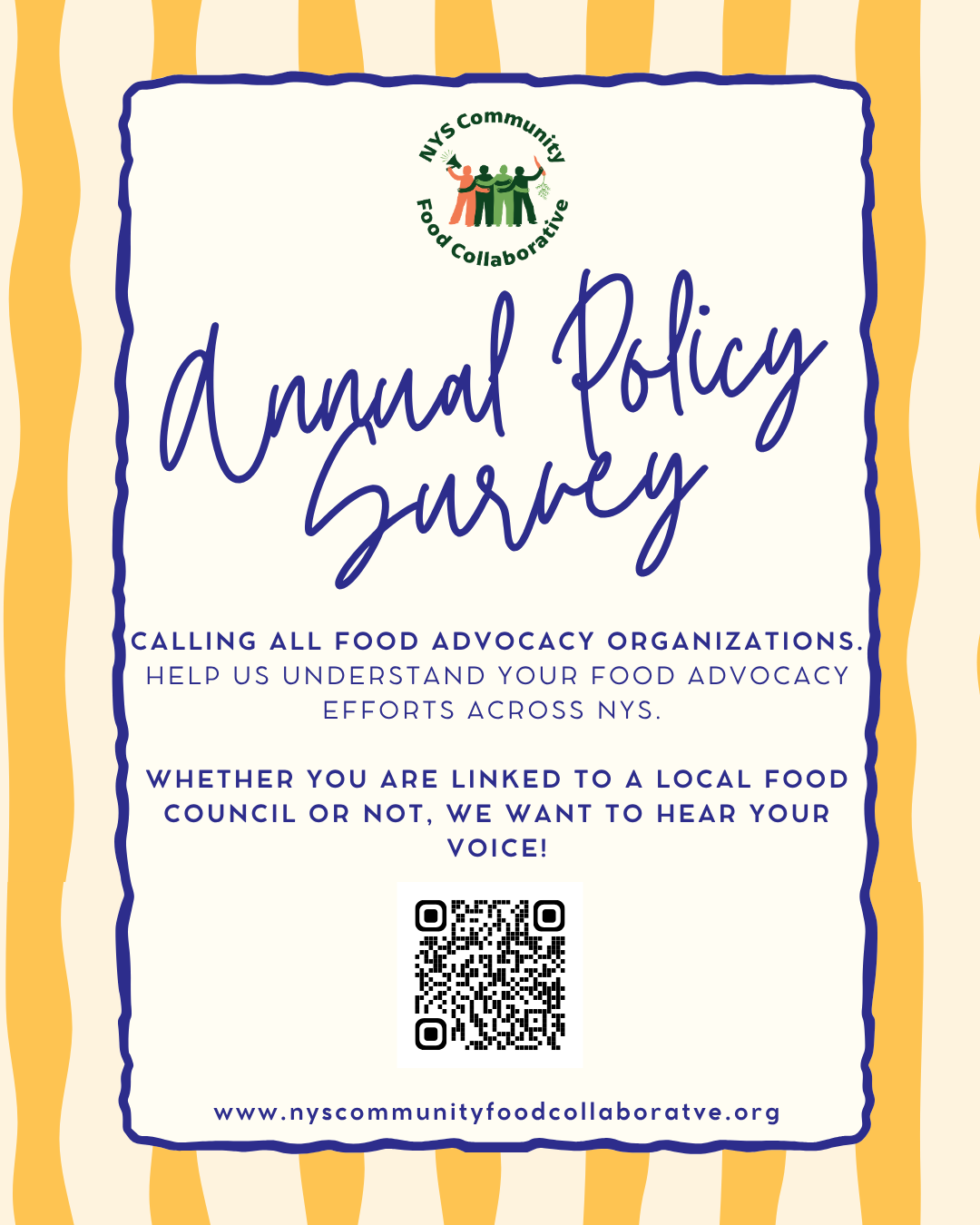
Are you an organization involved with a local food council or engage in food and agricultural advocacy in New York? Or maybe you want to?
In our first annual survey, we are hoping to understand the landscape of food and agricultural advocacy across the state. We look forward to developing our collective advocacy muscles together.
Click the link to be directed to the survey. The survey will close September 25.
Beyond expanding access to food; Local Food Councils address the upstream, structural drivers of hunger, such as transportation gaps, unaffordable and aging housing stock, economic instability, procurement barriers and market access, supply chain disruption, and racialized disparities in food and land access while also strengthening food democracy, deepening civic participation, and breaking down silos between sectors.
What is a Local Food Council?
Local Food Councils are cross-sector, community-led coalitions working at the local and regional level to strengthen food systems through collaboration, policy change, and place-based action. They are the "connective tissue" of the food system, building statewide food democracy through community-led governance.
Video from Better Food Policy Fund
Our Impact
Economic ROI & Local Impact
For every $1 invested in council coordination, local food procurement increases, keeping NY dollars in NY farms, businesses, and communities. . Strengthening regional coordination helps unlock local capacity, for context, just one acre of farmland in New York generates approximately 1,000 meals per day
Proven Crisis Response
LFCs are deeply rooted in community and have the ability to act faster and more effectively than siloes systems during disruptions. When 30,000 lbs of salmon were at risk of waste in Central NY, the local council Syracuse-Onondaga Food Systems Alliance (SOFSA) mobilized partners within hours to redirect food and feed thousands.
Climate Resilience
LFCs shorten supply chains, reduce food waste and lower transportation emissions by connecting producers, institutions, and eaters at the regional level, directly advancing NY’s Climate Leadership and Community Protection Act (CLCPA) goals
Building a Resilient Food System
New York’s food system requires both immediate anti-hunger supports and investments in long-term structural change. This new funding would complement essential programs like SNAP, WIC, school meals, and emergency food providers by building community capacity, fostering cross-sector coordination, and shaping the policy landscape needed to tackle root causes of food insecurity. LFCs focus on the root drivers of hunger: transportation gaps, unaffordable and aging housing stock, economic instability, supply chain disruption, and racialized disparities in food and land access.
Who We Are
Scaling local action for state impact
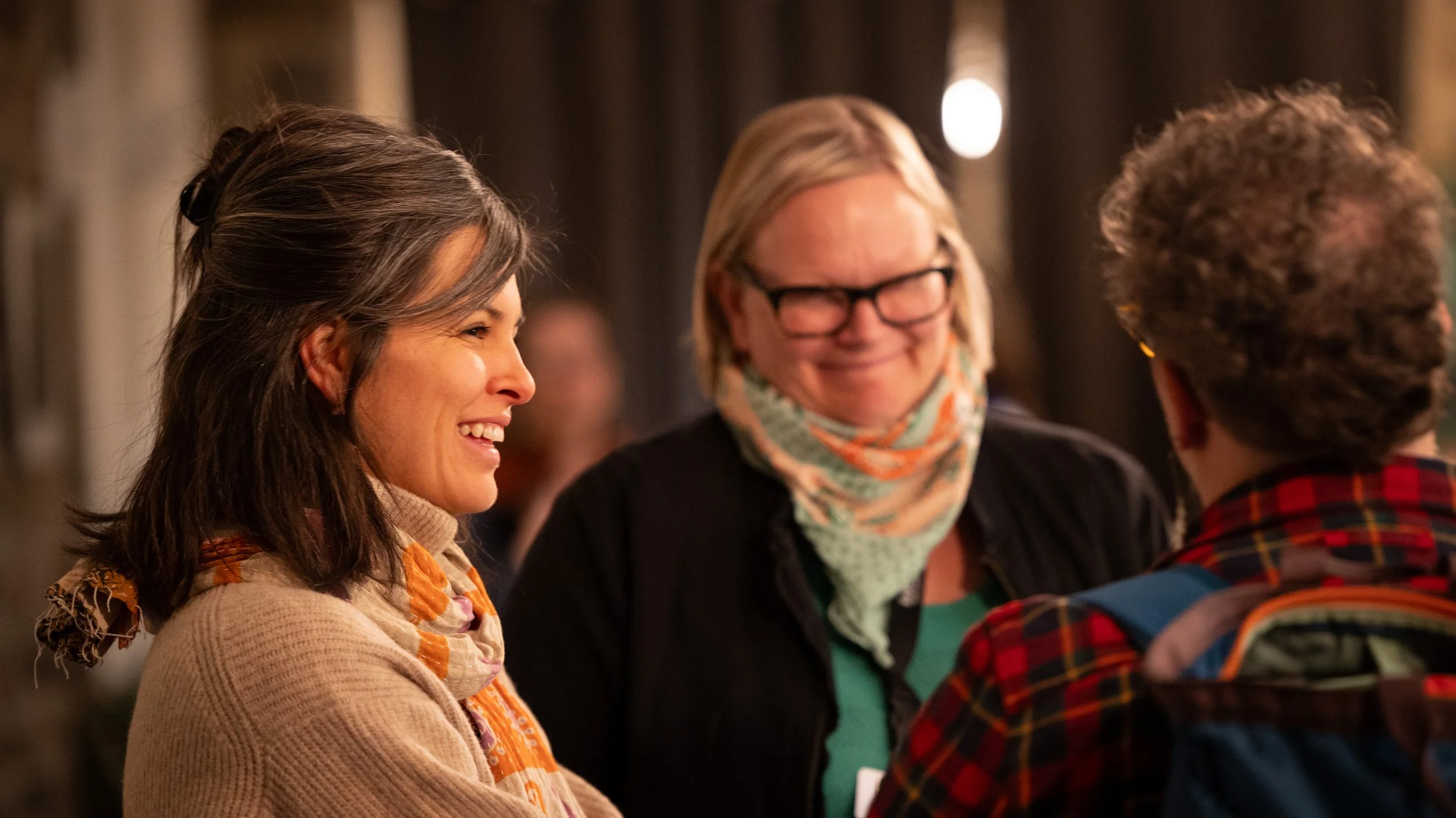
The NYS Community Food Collaborative is a network of community based, regional food councils and food system leaders from around the state.
Questions
-
The purpose of this statewide collaboration is foremost about building trust and communication. From this base we hope to amplify the work that each group is doing in their communities and further that voice at the state level. Learn more about our impact here
-
New York State benefits from the Council on Hunger and Food Policy, a formally appointed body that brings together senior agency leadership, statewide organizations, and institutional stakeholders to advise on policy priorities and program alignment. This council plays an important role in statewide coordination and high-level policy discussion.
Our collaborative centers local, grassroots efforts to uplift lived experience and give voice to our communities across the state through our regional councils. The State Council operates primarily through formal appointments and statewide representation, while LFCs operate through distributed, local leadership and lived experience, with consistent presence in communities. Notably, there is currently no formal representation of Local Food Councils within the State Council, and regional representation is uneven – for example, the North Country/Adirondacks, which accounts for roughly 20% of New York’s agricultural production, does not have direct representation.
-
We welcome new folks to the table!
Please use our contact form to get in touch and we can loop you in to our upcoming meetings.
-
There is currently no fee for joining our collaborative.
-
Right here!
Or you can email us directly at nyscommunityfoodcollaborative@gmail.com